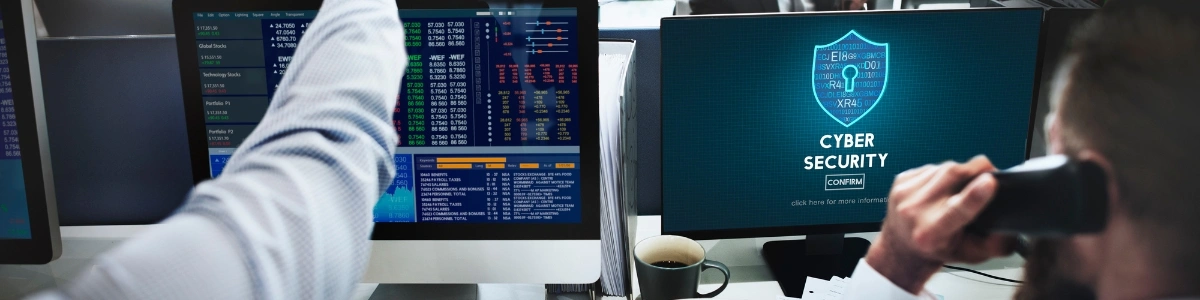
Given the crucial amount of data that accountants possess these days, it is not surprising that they are particularly vulnerable to cyberattacks. Vast amounts of sensitive information, including financial records, tax identification numbers, payroll details, bank account information, investment data, and intellectual property, make cyber-criminals highly motivated to obtain this crucial data.
Accounting Today reports that, since the onset of the COVID-19 pandemic, accounting firms have experienced a 300% surge in cyberattacks, as an industry already susceptible to cybercrime now faces the added challenges of remote work. Therefore, businesses and accounting firms must find ways to prevent the frequent occurrence of cyberattacks. Today, cyberattacks in the accounting profession are becoming increasingly frequent. Threat actors are increasingly considering accounting practices as a possible target. This includes ransomware attacks, too. Understanding cybersecurity for accountants has therefore become essential to protect client data and business continuity.
Any crime that uses a computer to manipulate financial or personal data stored online is known as an accounting cyberfraud. Therefore, cybersecurity for accountants can be defined as the practice of protecting sensitive financial and personal data from cyber threats like hacking, malware, and ransomware. The process involves implementing robust technical measures like firewalls, multi-factor authentication, and secure software. It also consists of implementing strong policies and regular employee training, which enables the prevention, detection, and response to cyberattacks, thereby maintaining client trust.
Since accounting firms store vast amounts of sensitive information such as bank details, financial records, and confidential business plans, they are prime targets for cybercriminals. Cybersecurity measures prevent this data from falling into the wrong hands.
KMK Ventures Perspective: At KMK, we believe data protection is the foundation of client confidence. Our cybersecurity frameworks are designed to secure every financial record entrusted to us.
Since the success of any accounting firm also depends upon maintaining the trust of clients who entrust these firms with their most sensitive data, it becomes paramount for the accounting firm to maintain this trust to the maximum. Any breach can severely damage this trust.
KMK Perspective: KMK operates on a trust-first principle. Our systems and teams ensure clients always feel confident about data confidentiality and security.
Accounting firms must follow strict data protection laws such as the GDPR (General Data Protection Regulation) and CCPA (California Consumer Privacy Act). Having robust cybersecurity measures in place helps meet these legal and regulatory requirements, ensuring that client data is handled safely and responsibly.
KMK Ventures Perspective: KMK’s compliance-driven approach ensures that all data-handling practices meet or exceed global privacy and security regulations.
A cyberattack can cause severe damage. Some of these include financial losses, legal action, and reputation harm. It can also interrupt business operations, create downtime, and delay client services. Proactive cybersecurity planning minimizes these risks and keeps the firm’s operations running smoothly.
KMK Perspective: KMK’s cybersecurity protocols are designed to protect financial data and maintain operational stability so our clients’ businesses continue without disruption.
Cybersecurity isn’t just about technology. It’s also about protecting trust. By using strong access controls, data encryption, and monitoring systems, firms can prevent financial fraud, identity theft, and other malicious activities that could compromise client data.
KMK Perspective: KMK prioritizes proactive fraud prevention through secure access controls, continuous monitoring, and encryption protocols that safeguard every layer of client information.
Building a secure accounting environment begins with smart, consistent cybersecurity habits. Here are the key steps every accounting firm should take to protect client data and maintain trust. Understanding and applying these best practices is a crucial part of cybersecurity for accountants today.
How KMK Ventures Can Help: KMK provides structured cybersecurity awareness programs for accounting teams, ensuring your staff understands real-world threats and knows how to respond safely.
How KMK Ventures Can Help: KMK sets up secure access management systems that follow the least privilege principle, making sure only the right people can access sensitive financial information.
How KMK Ventures Can Help: KMK helps accounting firms implement advanced encryption protocols and automated backup systems to safeguard data and ensure business continuity.
How KMK Ventures Can Help: KMK partners with leading cybersecurity providers to install, update, and monitor reliable protection tools that keep your firm’s network safe around the clock.
How KMK Ventures Can Help: KMK performs ongoing risk evaluations and system audits, identifying vulnerabilities early and helping firms strengthen their defenses before problems arise.
Read Also: Preventing Financial Fraud & Data Breaches: Why U.S. Firms Must Prioritize Cybersecurity in 2025
At KMK Ventures, we understand that cybersecurity for accountants is no longer optional—it’s essential to the integrity and success of modern accounting firms. Our team combines accounting expertise with advanced technology solutions to create a secure and compliant digital environment. We help firms design and implement end-to-end cybersecurity frameworks that include employee training, access management, data encryption, risk monitoring, and regulatory compliance support.
Also, KMK is committed to ensuring the security and confidentiality of our clients’ financial information. As a leading provider of outsourced accounting and tax services, we understand the importance of protecting sensitive data from unauthorized access, theft, and cyber threats. To achieve this, we have implemented a comprehensive security program that includes compliance with industry standards and regulations including the ones defined under publication 4557 of Internal Revenue Service, regular security assessments and updates, robust data encryption protocols, strict access controls, and ongoing staff training on data security best practices. We continuously monitor and evaluate our security measures to ensure that they remain effective and up to date with the latest threats and technology advancements. Our clients can have peace of mind knowing that their financial data is safe with us. Whether it’s protecting sensitive client data, preventing financial fraud, or ensuring business continuity after a breach, KMK Ventures acts as a trusted partner in strengthening your firm’s digital resilience and client confidence.
In an increasingly connected world, cybersecurity for accountants has become one of the most critical pillars of operational success for accounting firms. As firms handle more digital data and depend on cloud-based systems, the risk of cyber threats continues to rise. Safeguarding this information not only protects clients but also the firm’s reputation, revenue, and future.
Still unsure where to start? That’s where KMK Ventures comes in. With a deep understanding of both accounting operations and cybersecurity best practices, KMK Ventures helps firms build stronger, smarter, and safer financial systems, so you can focus on what you do best: serving your clients with confidence. fi

Dev Kothari, a seasoned leader at KMK, heads the Special Teams, where he leverages his extensive expertise in managing large-scale accounting and tax return processing for U.S.-based clients. With a keen eye for workflow optimization and stakeholder collaboration, Dev drives exceptional efficiency and quality in high-volume project delivery. As a dual-qualified CPA (AICPA, Arizona) and Chartered Accountant (ICAI), Dev’s blend of strategic insight and technical prowess positions him as a key asset in ensuring KMK’s clients consistently achieve their financial goals.
KMK is a top outsourced accounting and tax service provider. We offer end-to-end accounting and tax services for small to mid-sized businesses, with a team of 1200+ professionals, including certified public, chartered, and staff accountants.
Schedule a MeetingUSA:
651 N Broad ST STE 205 10055
Middletown, DE 19709
Phone: 941-877-2835
India:
300, Sankalp Square-3B
Sindhu Bhavan Marg,
Ahmedabad, Gujarat 380058
For Career: 91-98240-42996
Developed by Bluele | Copyright © 2026 | KMK Ventures Private Limited. | All Rights Reserved